
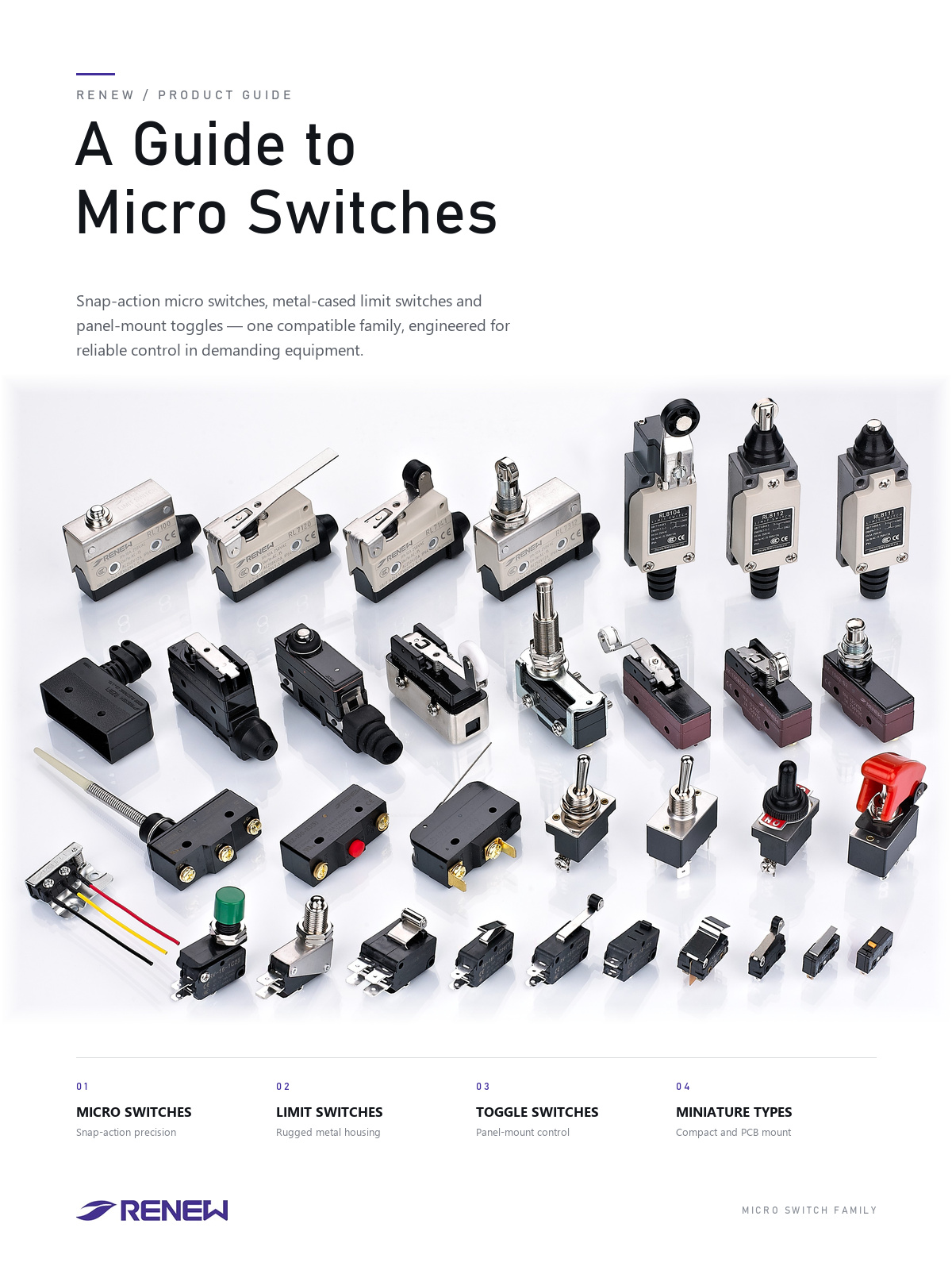
Currently all electronic equipment, automated appliances, and the like continuously need to ensure accuracy and reliability. The flourishing technology of micro switches with its own peculiarities of operation has proven to be quite effective, and therefore has become indispensable in different fields all over the world. Knowledge of these seemingly small but powerful devices—often referred to as mini micro switches or snap-action switches—can help improve the efficiency and working life of your devices/be it an engineer, designer of goods, fan of electronics, or a purchaser. This detailed article points out everything you need to know about micro switches including their operation, peculiarities, types, applications, methods of selection, etc.
What Is a Micro Switch?
A micro switch is classified as an electronically functioning switch that has a very rapid response to minute changes. It is also known as a “snap-action switch” or “miniature snap-action switch.” When some force is applied to the actuator of this switch, it immediately changes its position from one of its contacts to the other, producing a click sound. With such reliable operations, many people have turned to the micro switch for various applications.
The main advantage of a micro switch is its reliable switching behavior. It is usually constructed with a small spring mechanism and thin contacts contained within a sturdy plastic or metal casing. This means that micro switches can perform millions of cycles of work, making them suitable for different sectors of activity ranging from difficult industrial work to sophisticated consumer products. The popularity of micro switches is also increased due to the possibility of using these devices both as NC (normally closed) and NO (normally open) switches depending on the requirements of the design.
How Does a Micro Switch Work?
The main working principle of a micro switch is referred to as “snap action.” Each unit consists of a flat spring mechanism that produces a sudden action when the actuator is pushed beyond a threshold point. This results in immediate shifting of the electrical contacts leading to quick circuit opening or closing and making sound of “click.”
Micro switches come with three electrical terminals which are common (COM), normally open (NO), and normally closed (NC). Depending on the wiring of your circuit, you may either close the circuit by connecting COM to NO by activating the switch or break the circuit by disconnecting COM from NC. This particular and direct movement ensures precise control on the circuit and allows for minimal contact bounce which is of relevance in critical applications. An example of the well-known micro switch would be the SPDT micro switch (Single Pole Double Throw) which is used for establishing the current flow between two outputs and is very flexible for different electrical and mechanical control devices.
Main Features and Benefits of Micro Switches
Today’s automation technologies and electronics have set high standards for component level performance and made demand for mini micro switch designs that provide the required performance. Here below are the prominent features and benefits of this type of switch that made it popular:
Exemplary Reliability: Micro switches are made for the purpose of being repeatable. They can be used for millions of cycles without showing any signs of wear, which makes them ideal for applications where long-term reliability is essential and frequent maintenance is not possible.
Compact and Versatile: The size of these devices has led to their integration into small areas even within consumer products, security equipment, heating, ventilating, air conditioning systems, and vending machines.
Precision: These switches are responsive to tiny changes in the environment, making them suitable for applications such as safety features or precision machinery and thus minimizing the likelihood of accidents or hidden mechanical failure.
Wide Current and Voltage Range: A variety of micro switches are capable of managing both low as well as high voltage/current applications ranging from frail electronic signals to strong industrial applications.
Diverse Actuator Options: Actuators can be designed in accordance with requirements based on the type of lever, which might include rotary levers, roller levers, simulated levers, or plungers.
Cost Effectiveness: Although they have a high level of reliability, micro switches also have low prices and allow for redundancy to be used with no high expenses.
Types of Micro Switches
Micro switches are manufactured in various types to suit individual environments and applications. Here are some of the most common types:
Standard Micro Switch: The most commonly utilized type of these devices is for the general-purpose control of appliances in homes, electronics in cars, vending machines and industrial machinery. As such, this type is the most commonly employed in on/off, open/close, and start/stop operations.
Mini Micro Switch: Although smaller than standard designs, mini micro switches (or subminiature micro switches) are especially beneficial when space is limited which happens for example in remote controls, small consumer devices, and robot technology.
Waterproof or Sealed Micro Switch: These micro switches can withstand very restrictive and tough conditions due to their protective coverings that prevent any form of intrusion by dust, chemicals, or water making them ideal for outdoor applications, automotive engine areas, and food manufacturing machines.
Heavy-Duty Micro Switch: Heavy-duty options manufactured to endure greater burden and rough handling are usually found in much bigger industrial machines or farm vehicles.
Micro Switch Limit Switch: It is used primarily for detecting positions or endpoint situations for example in escalators or automatic doors. As soon as an object reaches a defined spot, the micro switch limit switch activates and commands the system to stop or change direction.
Specialty SPDT Micro Switch: In circuits needing to reverse the flow of electricity between two output paths, the Single Pole Double Throw (SPDT) micro switch plays a pivotal role; its use is especially relevant for control panels, thermostats and sophisticated automation controllers.
Applications and Use Cases of Micro Switches
Micro switches can be seen in almost any major industry today, due to the sheer number of types available. Some examples of their widest areas of use are:
Home Appliances: Microswitches serve as interlocks for washing machines and microwaves, sensors for water levels, controls in refrigerators, and safety switchers in kettles and coffee makers.
Automotive Electronics: Micro switches are the perfect choice when it comes to reliable, small, and durable products with the ability to ensure the safety of the driver and passengers in various applications, including adjusting the window, activating the brake light, trunk lid sensors, and seat belt detection.
Industrial Automation: Factories employ micro switch limit switches to monitor object placements and control conveyor systems, emergency stop mechanisms, and robotics feedback. This guarantees a seamless, secure, and accurate process.
HVAC and Building Automation: In HVAC systems, these micro switches can observe the position of dampers, pressure variation, and act as a switch to halt the operation in case a cover or panel is opened.
Security and Alarm Systems: Tamper detection, safe and vault opening sensors, and motion detection systems utilize mini micro switch mechanisms in order to provide quick and discreet solutions.
Medical Equipment: Micro-switches can be found in devices like hospital beds, infusion pumps, ventilators, and laboratory analyzers so that they can serve as position sensors or safety cut-offs and thus ensure operational reliability that might be crucial for clinical outcome.
Consumer Electronics: In devices and portable apparatus, micro switches provide tactile feedback and serve as actuators and push buttons to turn on the device or to perform a reset install.
How to Select the Right Micro Switch
The decision about which microswitch is suitable for your application significantly impacts its life span and efficiency. To make an informed choice, begin by analyzing what you want and how the conditions of the usage.
Electrical Ratings: Make sure to verify the voltage and current specifications. The use of micro switches outside the recommended voltage and current specifications can lead to premature failure and even a safety risk. Manufacturers’ specifications should always be kept in mind.
Actuator Style and Mounting: Make a decision whether a pin plunger, lever, roller, or any other specialized device is appropriate for your project. Additionally, mounting configuration (such as PCB, panel mount, snap-in, or screw) will be a significant factor in the decision.
Mechanical Life: Assess the number of cycles that the switch is expected to achieve in its lifetime. If the switch is used in harsh industrial – environments, a heavy-duty switch may be needed that can withstand tens of millions of operations at least.
Environmental Resistance: If the device is exposed in your environment to high humidity, extreme heat or cold, chemicals, or dust, choose sealed micro switches featuring appropriate certification (IP67 or beyond).
Size: In contemporary systems, space is frequently constrained, making it critical to use the most compact dependable component. The mini type of micro switch comes into play when space is a pressing need.
Switching Function: A basic SPST (Single Pole Single Throw) or a more adaptable SPDT micro switch may be the most appropriate taking into account the desired logic.
Engaging with experts from manufacturing or distributors may help in learning about certain requirements, types of custom actuators, and models of micro switches.
Installation and Maintenance Tips
Correct installation and regular maintenance will protect your investment and guarantee smooth operation. Here are some essential tips:
Follow Manufacturer Guidelines: It is essential to always follow product manuals and datasheets during installation. Improper attachment of the device or exceeding the electrical ratings usually leads to a product failure at an early stage.
Secure Connections: Loosely or improperly soldered terminals cause random failures, overheat. Select wiring techniques that will suit the voltage type and vibration.
Periodic Testing: In important systems, actors need to regularly check micro switch activation points as well as their responsiveness. Accumulated dirt, wear or environmental impact may affect their precision.
Routine Cleaning: Keep mechanisms clear of dust, moisture, and abrasive contaminants—especially in unsealed switches.
Replacement Planning: In case your application requires millions of cycles, construct a preventive maintenance and replacement program to eliminate expensive downtime or serious mistakes.
Troubleshooting Micro Switch Issues
Malfunctioning micro switches can lead to anything from simple annoyances to serious failures in systems. Quick identification and solving of the problem are necessary:
No Click or Loss of Tactile Feedback: This may mean there is either deterioration present in the snap-action spring or the unit’s interior has been contaminated. The more common solution is to have it replaced instead of attempting repairs.
Inconsistent Switching or Contact Bounce: Dirty contacts or worn-out actuators can cause unreliable signals. Cleaning and servicing may solve the issue in normal cases, but if the problem persists, replacing the switch is necessary.
Electrical Failure or Overheating: Excessive load or wrong installation may lead to this problem. Verify the rating and the way of mounting and upgrade the device if the load of the application has increased.
Mechanical Jamming: An actuator may stick due to foreign objects, bent actuators, or incorrect installation. Examine carefully and fix or replace accordingly.
Frequently Asked Questions About Micro Switches
What Is a Micro Switch? A micro switch is an electronic switch that is miniature in size and operates based on snap-action technology. Micro switches tend to find usage in controlling, detecting, and safeguarding applications due to their reasonable lifespan, compactness, and flexibility.
How Long Does a Micro Switch Last? Quality micro switches usually are guaranteed for millions, sometimes tens of millions of mechanical cycles given normal conditions which makes them really durable.
Can Micro Switches Handle High Power? While standard models are suitable for low to moderate currents and voltages, heavy-duty or power-rated micro switches are available for high-power industrial control.
What’s the Difference Between a Micro Switch and Mini Micro Switch? A mini micro switch is essentially a more compact version of the standard micro switch, designed for use in devices where space savings are paramount.
How Do I Choose Between SPDT and SPST Micro Switches? If you need a single input to toggle between two outputs, SPDT (Single Pole Double Throw) is the preferred choice. SPST (Single Pole Single Throw) suits simpler on/off applications.
Can I Use Micro Switches Outdoors? Yes, especially if you select a sealed or waterproof model rated for outdoor use and exposure to moisture, dust, or harsh temperatures.
Emerging Trends and Innovations in Micro Switch Technology
The field of micro switches is not static. Modern trends include the miniaturization of components for even higher-density electronics, development of environmentally-friendly (lead-free and RoHS compliant) designs, and the integration of wireless or smart switch technologies for the Internet of Things (IoT) applications.
There is also a growing demand for micro switches with longer lifespans, higher resistance to extreme elements, and custom actuator profiles for specialized industries like medical diagnostics, electric vehicles, and home automation. Manufacturers continually innovate materials, contact technologies, and actuator design to meet evolving needs, ensuring that micro switches remain a foundational technology in new and emerging product categories.
In summary, understanding the full range of capabilities, types, and use cases for micro switch and mini micro switch products can directly impact the performance and safety of your application. Careful selection based on functionality, ratings, and environment, followed by conscientious installation and proactive maintenance, will yield excellent reliability and cost performance. As automation, smart devices, and safety standards evolve, the indispensable micro switch remains at the core of modern electronics, trusted by engineers and manufacturers across the globe.
Post time: Oct-26-2026


